Skincare used to be simple. Then somewhere along the way, our bathroom shelves turned into full on skincare wardrobes. Toners, essences, exfoliating acids, serums layered on serums. Suddenly everyone seems to have a 10 step skincare routine, making it feel like more products meant better skin.
But in dermatology offices, the story often looks very different. Many people are dealing with irritation, breakouts, and stressed out skin from routines that have simply become too much.
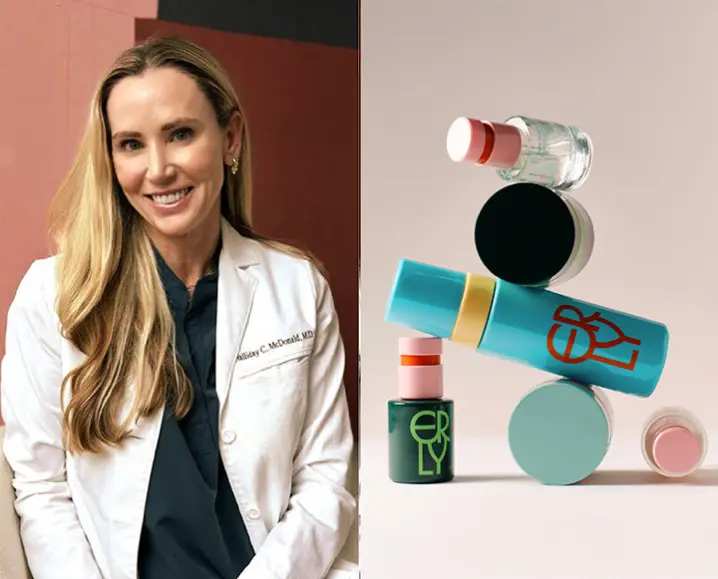
Dermatologist Dr. Hallie McDonald has seen this shift firsthand. After treating a growing number of patients experiencing reactions from overly complicated regimens, she helped co found ERLY, a derm founded skincare line built around a much simpler philosophy: fewer, smarter products that support the skin barrier instead of overwhelming it. We asked Dr. McDonald to break down why complex routines became so popular, what they’re actually doing to our skin, and how to build a routine that truly works.
Our Conversation With Dr. Hallie McDonald
Over the past decade, elaborate multi step skincare routines became widely popular. From a dermatologist’s perspective, why do you think people became so drawn to these complex routines in the first place? I think several forces converged at a similar time like a perfect storm. The rise of social media made the concept of skincare more aspirational. When people showcase 10 step routines, it looks luxurious, and skincare becomes almost meditative and a part of self care. Along those lines, there was an increase in ingredient transparency and consumer interest. However, as consumers learned more about ingredients, many assumed that more ingredients equaled better results. As influencer culture rose, so did the globalization of beauty trends, especially K beauty. Skincare shifted from basic hygiene to a hobby and identity for many people. Lastly, the COVID 19 pandemic accelerated the skincare boom because people had more time at home to experiment with routines, heightened stress that drove self care rituals, and constant video calls that made them more aware of their appearance.
From a skin health perspective, what actually happens when someone overloads their skin with too many actives? The skin barrier is designed to protect against water loss, infections, and environmental irritants. When you layer multiple actives like retinoids, exfoliating acids, and brightening agents, you disrupt that barrier. There is an increase in transepidermal water loss, redness, stinging, acne, perioral dermatitis, and eczema. Ironically, many people try to correct these adverse effects by reaching for more products, which worsens the cycle. I see this in my office every single day. People come in with adverse side effects from their skincare routines and show me the 10 products that they have been using to try to correct it. The solution is often to just simplify their routine and bring everything back to basics, and this is the reason I co-founded ERLY.
We see new skincare trends constantly emerging online. How can consumers tell the difference between a helpful trend and one that might be excessive? This is a tricky one because there is so much misinformation out there, and I think it is very important to get your skincare advice from a reputable source. What an influencer recommends might not be best for you and your skin. What works for your friend might not work for you. Make sure you are checking to see whether there is real science behind a recommendation. A lot of social media skincare trends are created to capture attention, often prioritizing dramatic visuals or extreme results over science and safety. Any promises of dramatic changes overnight should be a red flag.
Are there any current trends that concern you as a dermatologist? By far the most concerning trend to me is chasing the UV index. It has become very popular to follow the UV index readings on a weather app to try to optimize tanning. This is incredibly dangerous. What was designed to help people understand when the risk of sunburn is the highest is now being used to get deliberate sun exposure. A tan is a sign of skin damage, and UV is a known carcinogen. If you really want to look tan, then use a sunless tanner.
Recently we’ve seen the rise of trends like “skin flooding,” where people layer multiple hydrating toners, essences, and serums. From a dermatologist’s perspective, what’s your take on this approach? Hydration is certainly important, but your skin can only absorb so much at a time. Beyond a certain point, you are just increasing cost and complexity. Excessive layering can potentially lead to pilling or clogged pores. A well-formulated serum with hyaluronic acid followed by a moisturizer to seal it in is usually sufficient.
What would you say are the core products every skincare routine should include? A gentle cleanser, a daytime moisturizer with at least SPF 30, and a moisturizer without SPF for night should be in everyone’s routine. That foundation addresses cleansing, barrier support, and UV protection, which are the non-negotiable pillars of long term skin health.
What inspired you to create ERLY, and what gap did you see in the skincare market? As a dermatologist, I saw an exponential rise in patients coming into my office with adverse effects from their overly complicated and inappropriate skincare routines. Social media was driving a market saturated with products with harsh ingredients and heavy fragrances, and trends that did not prioritize barrier health. As a mother, I also became concerned about these influences on my own children. I co-founded ERLY to simplify skincare and bring it back to evidence-based essentials. The gap I saw was for hypoallergenic, fragrance-free, multitasking products that support the skin barrier while still delivering visible results. I wanted the products to be appropriate for all ages and skin types.
ERLY is built around the idea of simplifying and personalizing routines. What does that philosophy mean to you as a dermatologist? To me, simplification means understanding the science behind the products and thoughtfully choosing our ingredients but also purposefully excluding potential allergens and irritants. As a physician, each patient is unique, and I am trained to tailor treatment plans to my patients’ individual needs. Our product lineup is tightly curated intentionally because skincare does not need to be complicated to be effective. We created the serums to target specific skincare concerns to give people an opportunity to personalize their routine. Each serum addresses different things. Daily Dew is an illuminating serum with niacinamide and phloretin that brightens the skin and fights hyperpigmentation. Daily Splash has three forms of hyaluronic acid to hydrate, plump, and minimize fine lines. Daily Soothe has niacinamide to fight inflammation, redness, breakouts, and minimize pores. With this tight lineup, we can target a wide array of skincare needs in a gentle, barrier-supporting way that is appropriate for all skin types.
When formulating ERLY products, what ingredients or formulation principles were non negotiable for you? Fragrance-free formulations were totally non-negotiable because fragrance is one of the most common causes of contact dermatitis and irritation, and I wanted products that even sensitive, young, or barrier-compromised skin could use every day. I also focused on barrier-supporting ingredients like hyaluronic acid, niacinamide, and peptides.
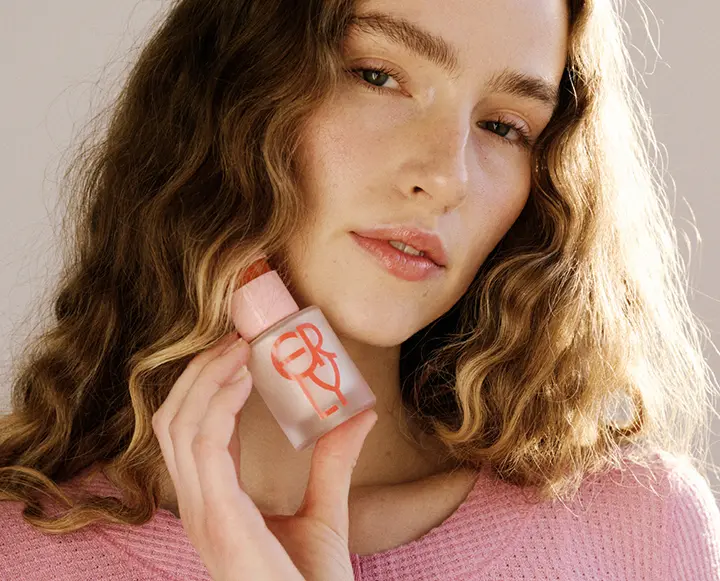
One product that’s gotten a lot of attention is Daily Dew Illuminating Serum (also a personal fav!), which gives skin that lit from within glow. What ingredients in Daily Dew help support skin health while also creating that luminous finish? I am so glad you love it! I love it, too. Daily Dew is formulated with niacinamide and phloretin. Niacinamide is a true ingredient overachiever- it acts as an antioxidant, fights free radicals, strengthens the skin barrier, improves redness, reduces breakouts, and minimizes pores. Phloretin is great for improving hyperpigmentation and brightening the skin.
If someone wanted to build a simple routine using ERLY products, what would that look like from morning to night? The core lineup would be as follows:
Morning:
Cleanse with ERLY Face Foam
Apply an ERLY serum (if needed)
Apply ERLY Start Moisturizer with SPF 40 (bonus- it also has peptides)
Evening:
Cleanse with ERLY Face Foam
Apply an ERLY serum (if needed)
Apply ERLY Night Moisturizer with Peptides
For the serums, I use the Daily Dew in the morning to give my skin that glow and act as an antioxidant. It is a great substitute for Vitamin C for sensitive skin. In the evening, I use the Daily Soothe for my redness and pore minimization and Daily Splash for extra hydration and plumpness. The serums are meant for personalization, so everyone can decide what their skin needs on any particular day.
Which product do you feel best represents ERLY’s philosophy of simple but effective skincare? ERLY Night Moisturizer with Peptides is a powerhouse product that is still safe for all skin types. Many people cannot tolerate retinoids, and peptides are a great alternative for antiaging benefits. Peptides help support collagen and elastin in the skin to improve fine lines and support the skin barrier. It also has Vitamin E that acts as an antioxidant, promotes skin healing, and fights inflammation. Hyaluronic acid is included for extra moisture and barrier boosting. It is non-comedogenic and safe for all skin types, including acne-prone and sensitive skin. Using this one product can target multiple skincare concerns at once, thus simplifying your routine without compromising results.
If someone could make just one change to their skincare routine today that would benefit their skin long term, what would you recommend? Wear a broad spectrum sunscreen every single day, even when it is cloudy and even when you are mostly indoors. Up to 80% of visible aging is due to cumulative sun exposure over time. Consistent sun protection preserves collagen, prevents pigmentation, and most importantly reduces skin cancer risk. I love ERLY Start Moisturizer with SPF 40 because it also a great multitasker. It is packed with peptides to support collagen and elastin, improve fine lines, and support the skin barrier all while providing broad spectrum UV coverage.
The post Why Dermatologists Are Rethinking the 10 Step Skincare Routine appeared first on The Chalkboard Mag.